
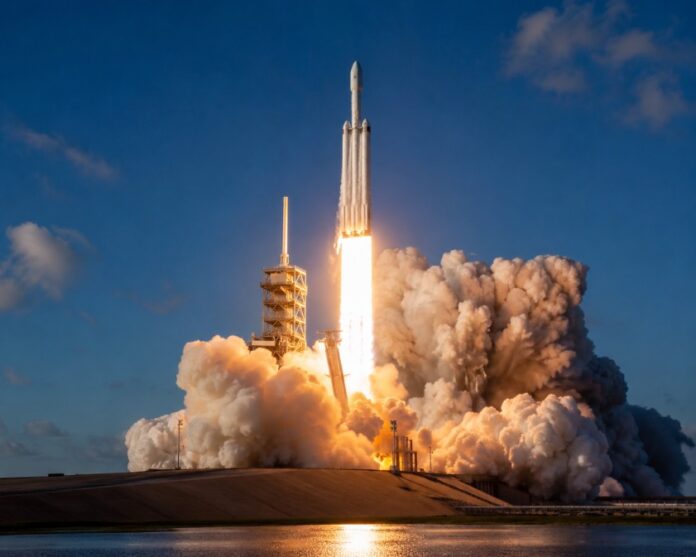
In a significant stride towards its lunar ambitions, China has launched the Shenzhou-23 mission, dispatching three astronauts to the Tiangong space station. This mission aligns with China’s aspirations to achieve a human moon landing by 2030, marking a pivotal moment in its expanding space program.
The launch was executed from the Jiuquan Satellite Launch Center, utilizing the Long March 2-F rocket. Onboard were astronauts Lai Ka-ying, Zhu Yangzhu, and Zhang Zhiyuan, with Lai Ka-ying making history as the first astronaut from Hong Kong to venture into space. This mission sets the stage for more robust scientific research efforts in orbit, as the crew will delve into studies across life sciences, medicine, fluid physics, and materials science.
One of the astronauts will remain in orbit for an entire year, marking China’s lengthiest human space mission. This extended duration is a strategic effort to examine the effects of prolonged microgravity on the human body, focusing on challenges such as bone density loss, muscle atrophy, radiation effects, and psychological pressures. Insights from this mission are expected to be instrumental as China gears up for further lunar and deep-space expeditions.
Previously, astronauts aboard the Tiangong space station have embarked on missions lasting up to six months. However, this current mission represents a significant leap towards facilitating long-duration spaceflights. In tandem with these efforts, China is developing the Mengzhou spacecraft, poised to succeed the Shenzhou system, thus reinforcing its capacity for upcoming lunar missions.
China’s space program has seen accelerated growth over the past 30 years, establishing the nation as a formidable player in global space exploration. The country’s ambitious plans include laying the groundwork for the first phase of the International Lunar Research Station by 2035. Building on achievements like landing a rover on Mars and deploying a probe to the moon’s far side, China continues to enhance its spacefaring capabilities, underscoring its commitment to exploring the final frontier.