
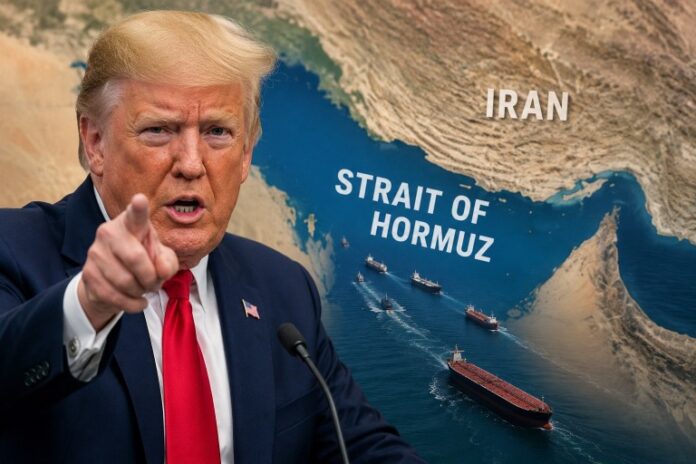
Amid ongoing tensions between the United States and Iran, President Donald Trump has suggested the possibility of declaring the Strait of Hormuz as American territory. This statement comes as Washington faces challenges in negotiating an end to the conflict with Iran. Speaking from New York on Friday, Trump indicated that the US might make this declaration “pretty soon” following a victory over Iran. He asserted that the US already has significant control over the vital maritime passage through a blockade.
The Strait of Hormuz is a critical global shipping route, with approximately 20% of the world’s seaborne oil passing through it. Positioned between Iran and Oman, the strait has seen limited access since military operations by the US and Israel against Iran commenced. It remains uncertain if Trump’s remarks signal an official shift in US policy or if they were primarily intended as political rhetoric.
Iran has responded dismissively to Trump’s threat. Kazem Gharibabadi, Iran’s Deputy Foreign Minister, stated that Tehran would not be swayed by US pressure, emphasizing that the authority to open or close the strait rests with Iran. Additionally, Iranian Foreign Minister Abbas Araqchi mentioned that Tehran has not decided to enter into negotiations with Washington, and the exchanges occurring through intermediaries like Qatar and Pakistan do not qualify as formal discussions.
Tehran has stipulated several conditions for the resumption of shipping through the Strait of Hormuz, including compensation for wartime damages, the lifting of sanctions, and the release of Iranian assets that have been frozen. The conflict and the resulting disruption in shipping have led to an increase in fuel prices, which is affecting consumers worldwide. In defense of the rising prices, Trump argued that Americans are paying more to prevent Iran from acquiring nuclear weapons.
The protracted standoff over the Strait of Hormuz is raising alarms over global energy security and the broader economic repercussions of the conflict. As the situation develops, the international community watches closely, concerned about the potential impact on energy supplies and economic stability.