
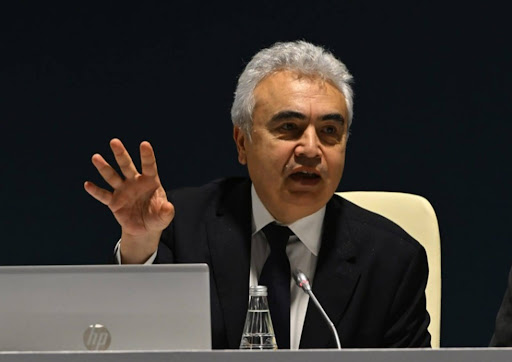
The potential disruption to desalination and water infrastructure in the Gulf, threatened by Iran as retaliation for US and Israeli military action, could deepen an already catastrophic energy and humanitarian crisis, the head of the International Energy Agency has warned. Fatih Birol, speaking in Canberra, said the Iran war had already created an energy emergency equivalent to the combined force of the 1970s oil shocks and the Ukraine gas crisis. Any further escalation targeting water infrastructure would compound the disaster.
Iran threatened to strike energy and desalination facilities associated with the United States and its regional partners after US President Trump issued a 48-hour ultimatum to reopen the Strait of Hormuz. Birol, while not commenting directly on the geopolitical standoff, said the IEA was deeply concerned about any further escalation that could affect critical infrastructure across the Gulf region. He said at least 40 energy assets had already been severely damaged by the conflict.
The war began February 28 and has since caused daily oil losses of 11 million barrels and gas losses of 140 billion cubic metres. These figures exceed those of the combined 1970s oil crises — which removed roughly 5 million barrels daily — and the Ukraine gas crisis, which cost markets 75 billion cubic metres. The Strait of Hormuz, carrying about 20 percent of global oil supply, remains closed to commercial shipping.
The IEA released 400 million barrels from strategic reserves on March 11, the largest such emergency action in its history, and called on governments to reduce energy demand through working from home, speed limit reductions, and aviation cuts. Birol confirmed that further reserve releases were under consideration if conditions warranted. He met with Australian Prime Minister Anthony Albanese as part of a broader diplomatic tour of Asia-Pacific capitals.
The IEA chief warned that the crisis had implications well beyond oil and gas, affecting fertilizers, petrochemicals, sulfur, and helium. He said any nation adopting a nationally defensive posture on fuel was contributing to a worse global outcome. His message to world leaders was consistent: international cooperation and the reopening of Hormuz are the only paths to real and lasting relief.