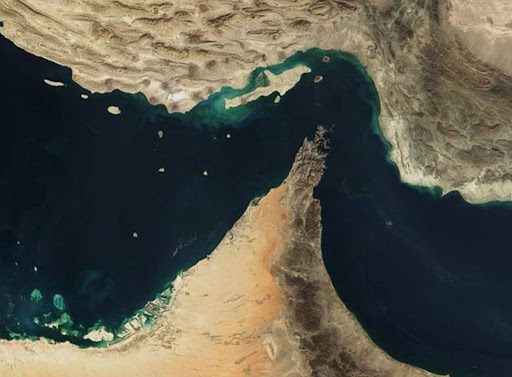
The toll of the Strait of Hormuz crisis is escalating rapidly, with sixteen tankers already attacked and global oil markets in disarray, even as the international community struggles to mount a coherent response to President Trump’s call for a naval coalition. Trump posted on Truth Social urging the UK, China, France, Japan, South Korea, and all oil-importing nations to send warships to the embattled waterway, but each government has responded with caution, delay, or outright refusal to act. The world’s most important oil shipping lane remains in Iranian hands.
Iran’s blockade of the strait began as a retaliatory measure following US-Israeli airstrikes and has since become a full-scale energy emergency. One-fifth of global oil exports ordinarily travel through the narrow passage, and their disruption has caused prices to surge internationally. Tehran has warned that oil tankers heading for the US, Israel, or their allies face immediate destruction. The prospect of Iran mining the waterway has added further risk to any potential naval operation in the region.
France declined outright, with its defence minister ruling out any deployment while hostilities continued. The UK confirmed discussions were underway about mine-hunting drones and other options. Germany cast doubt on expanding the EU’s Aspides mission to the Persian Gulf, saying it had not proved effective even in its current scope. Japan acknowledged the legal possibility of naval deployment while describing the threshold as extremely high. South Korea pledged to continue monitoring the situation carefully and said it was exploring every available option to protect its energy supply.
The economic damage continues to compound. Oil-dependent economies in Asia and Europe — particularly Japan, South Korea, and China — are struggling with rising energy costs and supply uncertainty. For EU nations, the Aspides mission currently operates with just three ships from France, Italy, and Greece in the Red Sea area; broadening its mandate to include Hormuz would require political consensus that does not yet appear to exist. The European foreign affairs council is understood to be examining options but has not reached agreement on a path forward.
China’s position is the most strategically significant of all nations involved. As a major Iranian ally and the world’s largest importer of Gulf crude oil, Beijing has enormous leverage — and equally enormous reasons to avoid military confrontation. Reports indicate that China is holding diplomatic conversations with Iran about facilitating safe passage for tankers. The Chinese embassy said Beijing would work to strengthen communication and play a constructive role in regional peace. US Energy Secretary Chris Wright said he was cautiously optimistic about China’s willingness to help resolve the situation diplomatically.